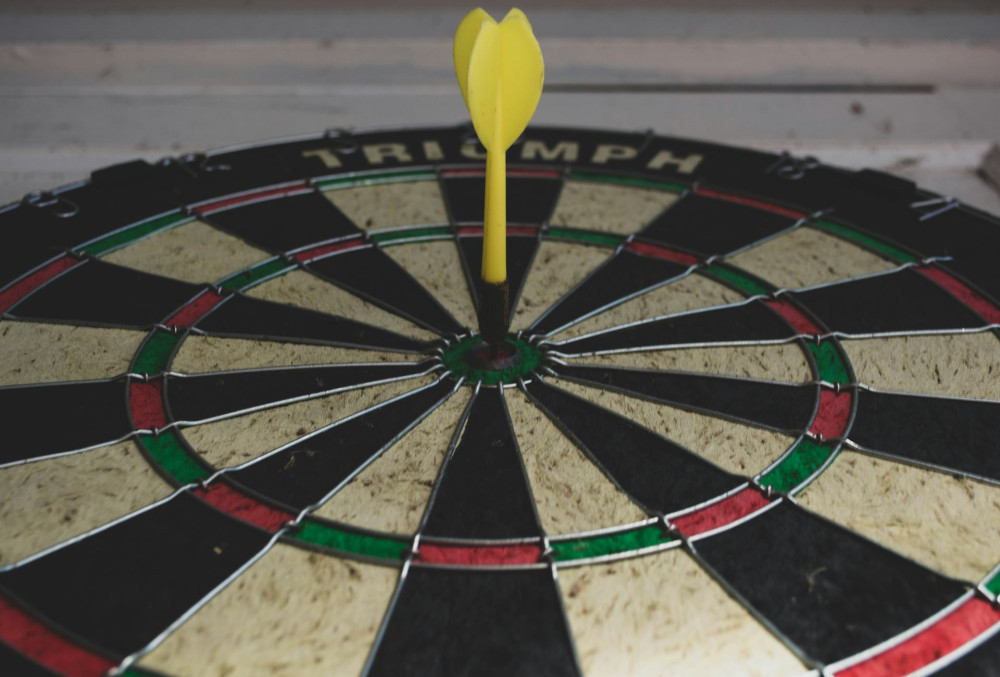
Develop Your Own Darts Tips with Statistics and Observations


Develop Your Own Darts Tips with Statistics and Observations
Developing your own darts tips isn’t just about gut feeling or luck – it’s about understanding the game, analysing data, and spotting patterns. Whether you play casually in your local pub or follow the PDC circuit with a keen eye, a structured approach can greatly improve your predictions. Here’s a guide to how you can use statistics and observations to create your own darts insights.
Understand the Game’s Structure and Key Variables
Before diving into analysis, it’s essential to know which factors influence a darts match. Darts is a precision sport where small variations in form, focus, and rhythm can make a huge difference.
The most important variables to track include:
- Three-dart average – shows how many points a player scores per round on average. A high average indicates consistency.
- Checkout percentage – measures how often a player finishes a leg when given the chance. A strong checkout rate often separates winners from losers.
- 180s and 140s – the number of high scores reveals a player’s ability to apply pressure.
- First nine average – indicates how well a player starts a leg, which can be crucial in shorter formats.
Understanding these key stats gives you a solid foundation for assessing players’ current form.
Use Statistics Wisely
Statistics are powerful, but they must be interpreted in context. A player might have an impressive average over a season, but if most of those matches were against weaker opponents, the number can be misleading. Always combine data with an understanding of opposition strength and match importance.
A good starting point is to:
- Compare players’ averages from their last five matches.
- Look at head-to-head records – some players struggle against specific opponents.
- Consider the tournament format: best-of-11 legs requires a different mindset than best-of-31.
- Check for fatigue – players competing in multiple events in a short period may lose sharpness.
By combining these factors, you can start identifying patterns that aren’t always reflected in bookmaker odds.
Observations: What the Numbers Don’t Show
Even the best statistics can’t capture everything. That’s why observation is a vital part of developing darts tips. Watch matches closely and pay attention to players’ body language, rhythm, and reactions.
Some useful observations include:
- Tempo and routine – players have different rhythms. A fast thrower might be unsettled by a slower opponent.
- Composure under pressure – some players tighten up when closing out a leg.
- Crowd influence – home advantage and audience energy can either boost or distract a player.
- Form trends – a player who’s been struggling but shows signs of improvement might be undervalued in the odds.
Combining your observations with statistical data gives you a more complete picture of how a match might unfold.
Læs også:




Build Your Own Model
Once you’ve gathered data and observations, you can start developing your own model for darts tips. It doesn’t have to be complicated – a simple spreadsheet can help you compare players and spot value in the odds.
Start by:
- Listing players’ averages, checkout percentages, and recent results.
- Assigning weights to the factors you consider most important.
- Calculating an overall “form score” for each player.
- Comparing your assessment with bookmaker odds to find discrepancies.
Over time, you can refine your model as you learn which factors best predict outcomes.
Learn from Your Results
Developing darts tips is an ongoing process. Record your predictions and compare them with actual results. This helps you identify where your analysis was accurate – and where it needs adjustment.
Ask yourself:
- Was my analysis based on outdated data?
- Did I overlook an important observation?
- Was I influenced by personal bias or past results?
The more systematically you review your work, the better you’ll become at forecasting match outcomes.
From Hobby to Insight
Working with darts statistics and observations can be both educational and entertaining. You’ll gain a deeper understanding of the sport and start noticing patterns that others might miss. Whether you use your insights to improve your own tips or simply to enjoy watching the game with a sharper eye, you’ll discover that darts is far more than just arrows and boards – it’s a game of data, psychology, and precision.
Læs også: